Posts

Respect Wildlife during Your Outdoor Adventure
Image
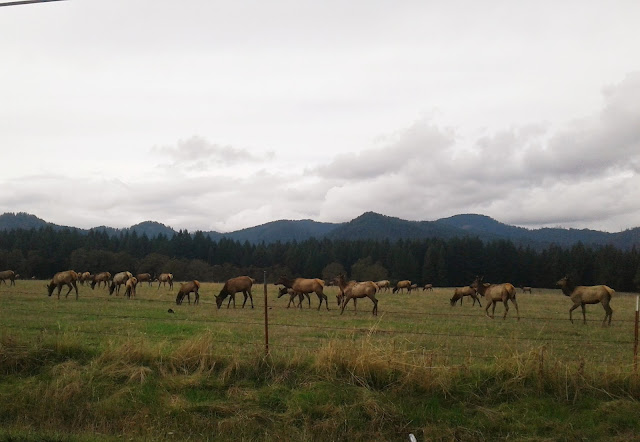
Wildlife live in the places we love to visit like the national forests, national parks, and nature reserves. During our visit to their home, we need to be  respectful of their space and eating habits, so as to protect wildlife from disease and protect you from physical harm. Whether you are camping, hiking, boating, or picnicking, it is extremely important that you NEVER FEED WILDLIFE. This is important for several reasons: 1. Wildlife gets accustom to receiving food from humans and begins to expect it. This can cause wildlife to be aggressive and sometimes violent. 2. It is harmful to the animals’ digestive system. 3. Interrupts wildfowl migration cycle  4. Keep Wildlife Wild – do not feed them! When camping…. Avoid attracting wildlife to your campsite by following these tips: 1. Keep food in airtight containers 2. Keep food out of reach of wildlife – keep locked up in vehicle 3. Do not feed wildlife! 4. Keep food out of your tent While wildlife ...

Letter Campaign: Encourage Your Congressional Representative to Support the “ProTECT Act of 2018” H.R. 5690

Image

Wildfire Preparedness Tips

Image
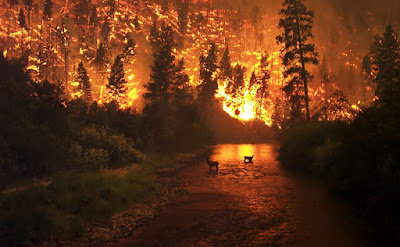
The Western U.S. use to have “fire seasons” now the West has “fire years” according to Vicki Christiansen, Chief of the Forest Service because wildfires now burn year around in the West. Keep your family and property safe by understanding wildfires and how to create a fire-retardant environment. Factors that contribute to disastrous wildfires include: 1. Uneven amounts of rain from year to year – during a rainy year, the understory vegetation grows dense. If the following year is a dry year, the dense vegetation dies and become fuel for fires. 2. Freezing weather will kill the vegetation turning into fire fuel. 3. Urban growth – building communities and houses in fire prone areas increases the available fuel 4. Wind – dry winds and/or fast winds help spread wildfires 5. Excessive fuel – reduced funding to the Forest Service has hindered their ability to maintain the amount of dense under-story growth in forests. Current policy prevents the use of prescr...

Plant a Pollinator Garden

Image
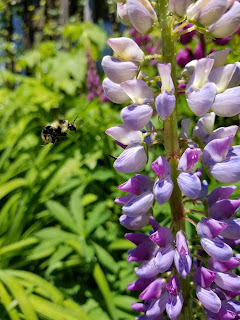
You can plant a pollinator garden anywhere – your yard, in pots on your patio, school, work, community gardens or churches. A garden filled with native plants will attract butterflies, bees and other pollinators and provide them with nectar while they in turn pollinate our fruits, vegetables, trees and flowers. Research What varieties of wildflowers and milkweed are native to your region? Don’t know! That is okay because the Xerces Society has compiled a list of regional native plants . It is best to purchase seeds from a local source because this will ensure the seeds you get are acclimated to your climate and resistant to disease in your area. If you are unsure of where to buy local seeds, the Lady Bird Johnson Wildflower Center at the University of Texas in Austin has a directory of national seed supplies . Supplies Garden bed, raised bed, or flower pots   Garden tools (hoe, shovel, hand shovel)   Nutrient-rich soil    Mulch   Native pl...

Traveling by Air – Consider Buying Carbon Offsets

Image
Air travel is one of the top ten causes of excessive greenhouse gas emissions. The emissions generated by air travel account for about five percent of the total warming effect. [1]   Twelve thousand thirteen cubic miles of polluted air is created by the airline industry each year, which is equivalent to a 4-inch thick layer of unbreathable air covering the entire Earth’s surface. [2] The warming effect and environmental impact of one round-trip flight from San Francisco to New York is equivalent to 2 or 3 tons of carbon dioxide per person. [3] To put this in perspective, the average American generates about 19 tons of carbon dioxide per year. [4] So, if you travel by air then consider buying a carbon offset to offset the carbon emissions produced by your travel. What are carbon offset? Carbon offsets are voluntarily purchased by individuals and companies that want to reduce their carbon footprint. A carbon offset (or carbon credit) is equal to one metric ton of carbon ...

Hunters and Anglers Wanted – Wildlife Conservation Depends on You

Image
“The excellent people who protest against all hunting, and consider sportsmen as enemies of wildlife, are ignorant of the fact that in reality the genuine sportsman is by all odds the most important factor in keeping the larger and more valuable wild creatures from total extermination.” ~ President Theodore Roosevelt Did you know? Seventy-five percent of a state’s fish and wildlife agency’s annual budget is generated from funds collected from sportsmen and women. Unfortunately, the amount of funds generated has decreased almost by half due to a drop in the number of hunters. In 2016, there were 11.5 million hunters compared to 1991 when there were 14.1 million hunters. [1] Wildlife conservation depends on sportsmen and women. How? Hunters and Anglers help fund wildlife conservation in several ways. The Duck Stamp (formally called the Federal Migratory Bird Hunting and Conservation Stamp) created in 1934 is required in order to hunt waterfowl. Ninety-eight cents ...

Handkerchiefs – bring back the popularity of this sustainable, reusable product.

Image
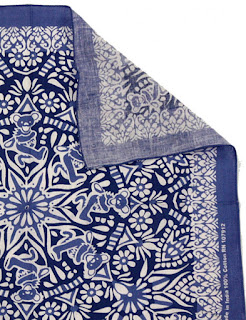
Handkerchiefs are made of sustainable and recycled materials and are reusable making them good for the environment especially when compared to the disposable paper facial tissue. Ever wonder why people stopped using handkerchiefs. Perhaps it was the invention of the disposable handkerchief otherwise known as facial tissue. Kleenex (the original facial tissue) was original invented in 1924 by Kimberly-Clark Corporation as a product to remove cold cream that was used to remove makeup. [1] After receiving letters from customers stating they use the Kleenex as a disposable handkerchief for blowing noses, Kimberly-Clark Corporation in 1930 began advertising the Kleenex as a disposable handkerchief. [2] Since then, sales have skyrocketed for facial tissue. In 2017, 216.94 million Americans used one or more boxes of facial tissue with 9.56 million using more than eight boxes. [3] Hygiene is a valid concern about using handkerchiefs. While it may be true that disposable f...