Posts

Great Backyard Bird Count Citizen Scientist

Image
The Great Backyard Bird Count is your opportunity to be a citizen scientist and help Cornell Lab of Ornithology and the Audubon Society gather information on the North American bird population. For at least one day between February 14-17, 2020, simply count birds for 15 minutes. You can bird-watch from the comfort of your home or in the great outdoors. Why help? You will help create a snapshot of the abundance and distribution of bird populations. This information along with other citizen-science projects helps scientist develop a broader understanding of bird populations . Bird Identification Many people do not know what type of birds live in their area. Do not let this keep you from participating in the Great Backyard Bird Count (GBBC). There are several sources for helping you identify the birds in your regions, such as the free online resource published by the Bird Watcher’s Digest . Participation Information CREATE… First create a free GBBC account with...


Reduce Plastic Packaging - Write and Request It

Image
If you want change then you need to ask for it. You know plastic pollution is a major contributor to environmental degradation. According to the EPA (2018), in 2015, the United States generated 34.5 million tons of plastic waste. In 2017, the U.S. produced 80.1 million tons of product containers and packaging of which 14.5 million tons were plastic packaging and containers.  If you want to stop polluting the environment with plastic, then you need to stop using it. Unfortunately, plastic is everywhere and almost everything you purchase is packaged in plastic. One way to reduce plastic pollution is to request that your favorite retail grocery store stop using single-use plastic and increase or add a bulk goods section. “Never doubt that a small group of thoughtful, committed, citizens can change the world. Indeed, it is the only thing that ever has.” ― Margaret Mead The following is a sample letter that you can copy and paste or use this link to access the sample l...

Holiday Gifts that Give to the Environment

Image
Crater Lake National Park  © Amy Bradley 2019 “The unselfish effort to bring cheer to others will be the beginning of a happier life for ourselves.”  – Helen Keller Typically, during the holiday season, we consider and purchase gifts for our loved ones that are often not environmentally friendly. To be frank, the holiday season is filled with wasteful traditions. Consumerism is one of the top contributors to waste, environmental degradation, and climate change. One way to improve your carbon footprint while giving a gift to a loved one, is giving a gift that benefits the environment. Before purchasing material goods as a gift for your loved one, consider the following environmentally and socially kind gift ideas! Living Tributes The U.S. Forest Service and the Arbor Foundation sell living tributes, which are trees planted in the in honor of a named loved one. The honoree receives a customed greeting card in the mail detailing the type and location of the tree....

Eco-Friendly Travel Tips

Image
Be kind to the environment when you travel this holiday weekend. Are you traveling for the holiday weekend?  Read about how to reduce carbon emissions while traveling . Do you plan on flying to your destination?  Read about how to reduce your carbon footprint when flying . Will you be exploring the great outdoors?  Read about how to leave no trace and how to respect wildlife . Will you be exploring nature with your pet? Read about traveling with a pet .

Reduce Consumption – Reduce Waste - Reduce Carbon Emissions

Image
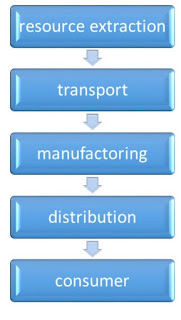
Reduce Consumption – Reduce Waste -  Reduce Carbon Emissions A great way to reduce carbon emissions is to purchase fewer goods. In other words, buy less stuff . In 2017, U.S. consumers purchased $3,513 billion of retail goods. [ 1 ] That's a lot of stuff! Every part of a retail goods life-cycle produces carbon emissions. In that same year, the U.S. produced 6,456.7 million metric tons of greenhouse gas emissions of which 82% was carbon dioxide. [ 2 ] Nationally, the U.S. generated 262.4 million tons of household solid waste. [ 3 ]  On average, a person living in the U.S. generates 4.48 pounds of solid waste a day . [ 4 ] Source: EPA, n.d. The way to view our relationship with household goods that eventually become waste is: (1) reduce consumption; (2) prevent waste by reusing and composting at home; (3) recycle what cannot be reused; (4) sent to landfill. The Take Away:  By reducing our consumption of retail goods, we reduce...

Reduce Carbon Emissions – Air Dry Your Laundry

Image
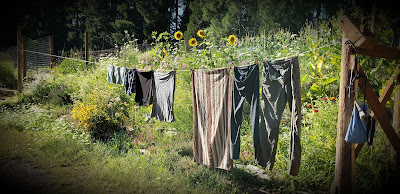
One easy way to reduce your carbon footprint is to air dry laundry instead of using a clothes dryer. On average, a standard electric dryer uses 967 kilowatt hours / year (based on 416 cycles/year) and a gas clothes dryer uses 1,091 kilowatt hours /year. [ 1 ] 1 kilowatt hour of electricity = 1.6 pounds of carbon dioxide (CO 2 ). [ 2 ] 1 load of laundry dried in electric dryer = 2.3 kWh 1 load of laundry dried in electric dryer = 3.68 lbs. of CO 2 Air drying one load of laundry prevents 3.68 lbs. of CO 2 from entering the atmosphere! When you can, air dry your laundry. You will save money and energy and reduce the amount of carbon emissions entering the atmosphere. References: [1] US Department of Energy. November 2011. ENERGY STAR Market & Industry Scoping Report Residential Clothes Dryers. US Department of Energy. Retrieved from https://www.energystar.gov/sites/default/files/asset/document/ENERGY_STAR_Scoping_Report_Residential_Clothes_Dry...

Prevent Unnecessary Harm to Wildlife

Image