Posts

Travel Tips: How to Reduce Carbon Emissions This Holiday Season

Image
Travel increases during the holiday seasons. During the Christmas season, traveling long-distance by vehicle increases by fifty percent and tens of millions of passengers will travel by air. This extra travel equals an increase in carbon emissions and an increase in waste all and all the holiday season is not a good time for the environment. There are steps you can take to reduce your carbon emissions and energy use this Christmas season. Road Travel If you are traveling on the roads this holiday season there are ways you can reduce your carbon-footprint. Empty your car after all driving trips – an extra 100 pounds can increase your gas cost up to $0.08 per gallon Carpool or take public transportation Go easy on the gas pedal and brakes Maintain your vehicle before you go Oil change Tire pressure Don’t let your vehicle idle – now that the weather is cold it is more tempting to keep the vehicle idling to keep warm. This wastes fuel, increase carbon emissions, a...

Small Acts Equal Big Change

Image
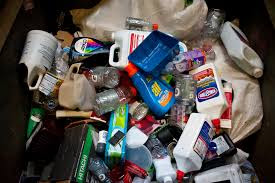
“One person can make a difference, and everyone should try.” John F. Kennedy It is easy to think that what you do on a daily basis does not matter or make a difference; this is not true. Every small act matters and can make a difference. Even if you cannot recycle every piece of debris, recycle what you can when you can – it matters. Even if you forget to turn off the lights and television when you leave the house – do it when you do remember – it matters. Even if you throw away a container you could have reused – don’t fret and give up – just do it when you remember. The more we practice resource conservation, the easier and more natural it becomes. “In this life we cannot always do great things. But we can do small things with great love.” Mother Teresa Reduce, reuse, recycle…we’ve heard it before. Do it when you can! And spread the word. Word of mouth is a powerful tool. Let others know that you do what you can when you can to conserve resources. Maybe your famil...

Prevent Storm Water Pollution

Image
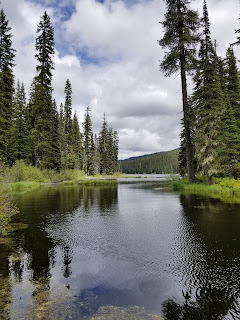
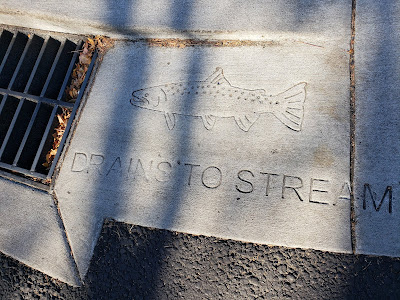
Storm water is water and snow melt that does not soak into the ground. Storm water eventually runs off into the waterways. The flowing water picks up pollution off rooftops, paved areas and lawns. Pollution can include pesticides, fertilizers, motor oil, sediment, litter, and animal waste to name a few. The Problem Storm water and ditches drain into streams and rivers carrying the pollutants with it. Storm water polluted with fertilizers and excessive nitrogen damage the quality of rivers, lakes, and wetlands by introducing excessive nitrogen, which promotes algae overgrown and depletes oxygen. Pesticides, herbicides, and automotive toxins harm water quality and aquatic life. Additionally, animal waste has bacteria that when washed into the storm water can make rivers and lakes unsafe for swimming and fish consumption. The Solution When possible, buy household products labeled “nontoxic”. Clean water-based paints in sinks that go to the sewer system. For oil-base...

Spooky Upcycled Halloween Decorations

Image
This Halloween take your decorations to the next level by upcycling materials. Upcycling is a way to turn rubbish into treasure. This is a great way to reduce the amount of materials that enter the landfill. In 2013, 254 million tons of trash were generated by Americans. [ 1 ] That is a lot of municipal waste! When creating upcycled decorations, use recycled or reused materials. Also, make sure to recycle or store your Halloween creations. Do your part to reduce, reuse, and recycle. 1. Ceiling Fan Blade Ghosts For this project, simply paint the ceiling fan white and paint black spooky eyes. (Source: sadieseasongoods.com) 2. Spooky Glowing Eyes This project is easy and fun for the kids. Simply take an empty toilet paper roll and cut out spooky eyes. Finally push several glow sticks into the toilet paper roll and voila - you have a pair of spooky glowing eyes.  (Source: rustsunshine.blogspot.com) 3. Haunted Faces and Jack-o-lanterns There are several contain...

Are marine reserves needed to protect global fisheries?

Image
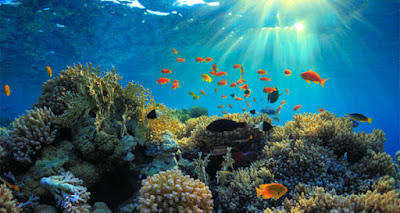
Picture Credit: N.O.A.A. Marine reserves are a crucial component in protecting global fisheries and ensuring a healthy ecosystem. Productivity and species diversity are often used to measure the health of an ecosystem and it is exactly these components that are declining in many coastal habitats. [1] A marine reserve is an area of ocean that is completely protected from any and all extraction activities (i.e. fishing, netting). This protection from extraction activities makes marine reserves a useful tool for ecosystem-based management because habitat alternation ends allowing for the recovery of several species populations at the same time. [2] Community outreach is an excellent way for resource managers to hear and consider the concerns of the local citizens affected by marine reserves as well as for citizens to learn about the benefits and importance of marine reserves. Marine reserves are a useful tool to learn more about ocean resources and protect them for future...

Why should you care about the environment?

Image
We (humans and wildlife) all live on the same planet and share natural resources. We all breathe the same air, drink the same water, and eat food grown in shared soils. Essentially, we are all connected to each other and dependent on the same resources. Therefore, we should all consider the Earth and its environment our home. We should feel connected to the resources we use and depend on instead of disconnected like the majority of us feel. If we begin to view the environment as our home, we may be more incline to keep it clean and thriving. Often we feel disconnected from the environment around us. We buy food from the store instead of working the land ourselves. We turn on the tap for clean water taking for granted that 783 million people worldwide do not have access to clean and safe water (Water Project, 2016). A more sobering fact is that in 2014 1.6 million Americans reported not having access to running water, a toilet or a tub/shower (Riggs, 2018). Let us not take for gran...

Durable, Reusable, Eco-Friendly Products

Image
According to the EPA 1 , in 2015, the United States generated 34.5 million tons of plastic waste. Unfortunately, Americans did not recycle most of this plastic waste. Only 9.1% of plastic was recycled in 2015 with 26 million tons entering the landfill. 2 Let us take control of our plastic waste by using durable, reusable, eco-friendly products. GLASS STRAW Replace disposable plastic straws with reusable glass straws. Look for one that is durable, reusable, and eco-friendly. Select a glass straw that is BPA Free, Non-Porous and Hypo-Allergenic. Also, make sure that it is approved for both hot and cold beverages. An example is the straight classic glass straw by  Simply Straws . STAINLESS STEEL STRAW If you are concerned about breaking a glass straw then the stainless steel straw is a good alternative to the disposable plastic straws. Look for one that is food grade and constructed with 18/8 stainless steel. An example is the 5-piece stainless steel straw set ...